

Back to school: when routine returns, so does security
March brings new schedules, longer journeys, backpacks, tacos, full public transportation and—above all— more time away from home. And when the routine changes, the “small oversights” increase: leaving in a hurry, running out of battery, not letting us know that you are late, getting lost in the group, walking alone at night.
The good news: you don't need to live in fear or make eternal plans. With a simple 10 minute plan, you can greatly increase your peace of mind (and that of your family) for school, university or work.
The 10 minute plan
1) Define 3 emergency contacts (and order them)
Choose people who yes answer and that they can act quickly:
-
Contact 1: whoever is most available during class/work hours
-
Contact 2: backup (partner, family member, close neighbor)
-
Contact 3: someone who can move or coordinate (self, closeness)
Key tip: Write them a short message letting them know that you will be emergency contacts, so that they are not caught by surprise.
2) Agree on a “key message” for uncomfortable situations
A simple and neutral message that means “I need help”:
-
“Can you send me the recipe?”
-
“Can you call me in 2 minutes?”
-
“Hey, how's grandma?”
It is used for children, adolescents and university students. It's discreet and works even if you don't want to explain too much in the moment.
3) Define 2 meeting points (in case everything fails)
One near the place (school/university) and another near home:
-
Point A: concierge/main entrance/concierge/reception
-
Point B: specific kiosk / pharmacy / visible premises / family member's house
The rule is simple: If something happens, we will meet here.
4) Express checklist of the journey (30 seconds before leaving)
-
Cell phone with battery? (ideally +30%)
-
Mobile data and location working?
-
Keys and wallet?
-
Defined route? (if you changed, let me know)
-
Estimated time of arrival?
This avoids 80% of the “he doesn't answer” or “I don't know where he is” anxiety.
Safety by stage: school, middle school and university
A) If it is a child (school)
-
Teach him to identify safe adults: inspector, porter, secretary, janitor.
-
Practice a help phrase:
“I'm lost / I can't find my agent, can you help me call?” -
Clear rules: do not leave with another person without confirmation.
Mini-habit: may you always know to whom ask for help within the school.
B) If you are a teenager (medium)
Here the risk is not always “serious”: it is also uncomfortable situations, social pressure, route changes, walking with headphones, etc.
-
Avoid dark streets or shortcuts “to save 5 minutes”
-
If you are going to change your plan, send a message such as:
“I'm leaving for X, I'm arriving at Y.” -
In transport: bag in front, discreet cell phone, pay attention to descents
Emotional key: conversation without sermon. Question:
“What part of the journey makes you the most insecure?” and from there they adjust habits.
C) If you are a university student or are returning late
-
Agree to “check-in”: a message when you leave and another when you arrive
-
On night trips: prioritize illuminated routes with people
-
If you use transportation apps: confirm license plate/car and sit in the back
Practical tip: Have a contact ready who responds quickly, especially at late hours.
Where does ALARA come in for a calmer return to school?
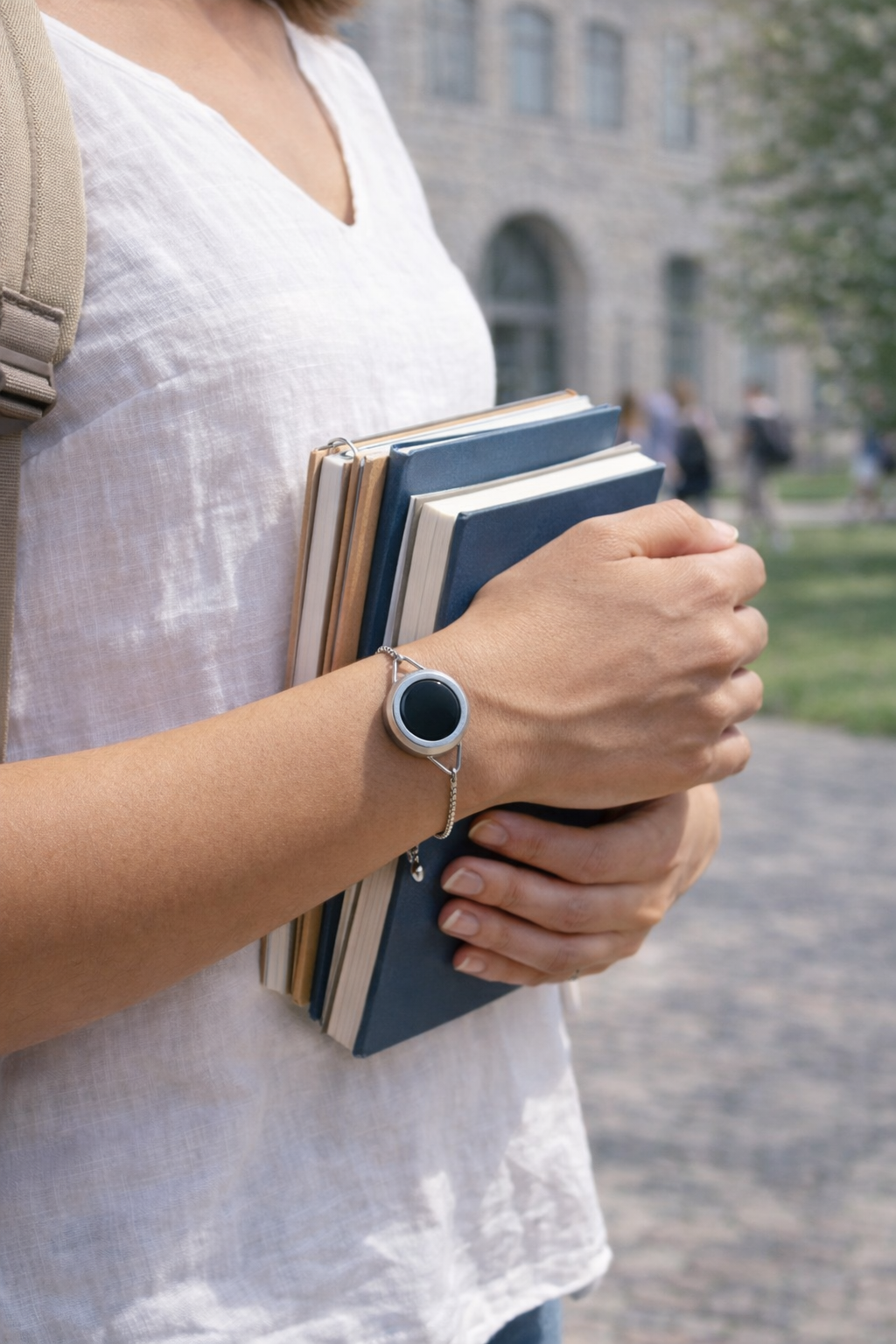
ALARA is designed for real life: when you are in a hurry, with a backpack, with your cell phone in your pocket, or when you don't want to attract attention.
In a risk or emergency situation, the idea is to be able notify quickly and send your location in real time to your emergency contacts from the app, without depending on writing long texts at the moment.
Use it as a simple “plan B”:
-
Helps you connect with those close to you when every second counts
-
Allows you to maintain a ready support network (contacts + location)
-
Add peace of mind for families, students and people who move alone
(And as always: any technology is a support, it does not replace self-care measures or emergency services.)
5 simple habits for all of March (and for the entire year)
-
Notify route changes (even if it is a 5 second audio)
-
Don't walk looking at the screen in lonely streets
-
Hold charge: short cable in backpack or powerbank
-
Enter safe places if you feel uncomfortable (pharmacy, cafe, porter)
-
Trust your intuition: if something doesn't fit you, walk away
Going back to school shouldn't feel like a leap into the void. With a simple plan + concrete habits, you can regain peace of mind.
If you want to add an extra layer of personal security to your daily life, learn about ALARA devices and build your emergency network with your trusted contacts.
Share:
Safety checklist: what to check in your car before going on a trip
Security with autonomy: how to take care of your teenage children without invading them (and with practical tips)